
At Total Turf Inc., we know that pavers in Westchester County, NY, take a beating every winter, from nor’easter snowfalls to the constant freeze and thaw that defines a Lower Hudson Valley January. Your driveway, walkway, and patio pavers are built to handle it, but a little seasonal care goes a long way toward keeping your hardscaping sharp, safe, and solid for decades. Here is how to help protect your investment from the first frost to the spring thaw:

Why Winter Is Tough on Pavers
The real enemy is not snow. It is water. Moisture seeps into the joints between pavers and down into the base beneath them. When temperatures drop, that water freezes and expands, and when it warms up again, it melts and settles. Repeat that cycle a few dozen times (and Westchester often swings above and below freezing several times in a single week), and you can end up with shifted, uneven, or heaved pavers.
The good news is that interlocking pavers flex with the ground instead of cracking the way a poured concrete slab does. That flexibility is one reason they are such a popular paving choice. Still, they perform best when you give them a little attention before and during the cold months.
Prep Before the First Freeze
The best winter maintenance starts in the fall:
- Clear away debris: Leaves, pine needles, and dirt trap moisture against the surface and can leave stains behind. Sweep or blow them off before the snow arrives.
- Check the joints: Look for gaps where joint sand has washed out. Refill them with polymeric sand, which hardens to lock pavers in place and keep water and weeds out.
- Fix loose or sunken pavers now: A small dip in October can become a tripping hazard (or a puddle that turns into a sheet of ice) by February. Resetting a few pavers is quick work before the ground freezes.
- Seal while the weather allows: A quality sealer helps repel water and resists salt damage. Apply it in early fall while daytime temperatures are still comfortably above 50 degrees so it can cure properly.
- Look at your drainage: Make sure downspouts point away from your patio and walkways, and that surfaces slope enough for meltwater to run off instead of pooling.

Shovel Smart
How you clear snow matters as much as when you clear it.
Use a plastic shovel or one with a rubber-edged blade. Metal edges can chip the surface of concrete pavers and catch on paver edges, which pulls them out of alignment. If you use a snow blower, raise the skid shoes slightly so the auger housing does not scrape the surface. Hiring a plow service for a paver driveway? Ask them to use a poly or rubber cutting edge and to keep the blade raised just above the surface.
Try to clear snow promptly, before foot traffic and tires pack it down into ice. And when you pile it up, choose a spot where the meltwater will drain away from your hardscaping rather than right back across it.
Choose the Right Ice Melt
Traditional rock salt (sodium chloride) is cheap and everywhere, but it is hard on your property. It can cause surface scaling on concrete pavers, corrode nearby metal, and damage the lawn and shrubs along your walkways.
Gentler options work well in Westchester’s climate. Calcium magnesium acetate is one of the safest choices for both pavers and plants. Calcium chloride also works well at low temperatures, as long as you use it in moderation and follow the label. For extra traction without chemicals, a light layer of sand does the trick, and you can sweep it up in the spring.
One caveat: if your pavers were installed this year, check with your installer or the manufacturer before using any de-icer, since some recommend skipping chemical melts during the first winter. And no matter how old your pavers are, never chip at ice with a shovel edge, pick, or hammer. Let the ice melt do the work.
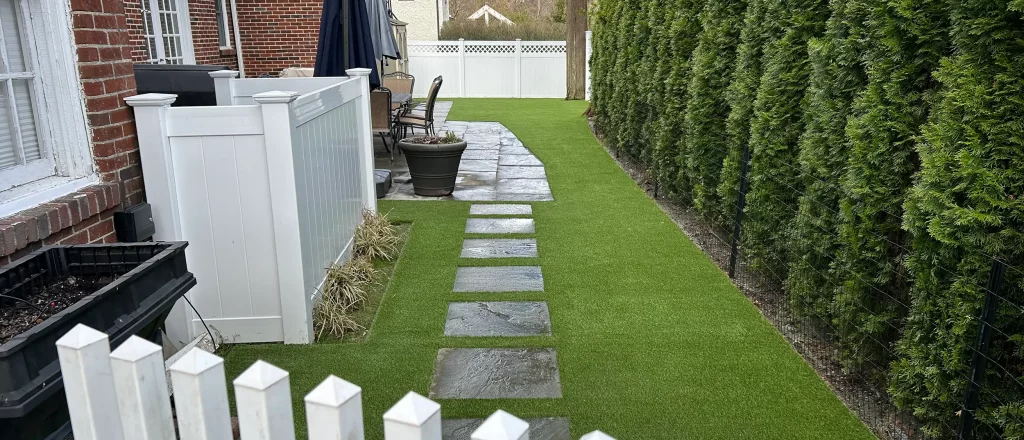
Protect Your Front Yard Landscaping Too
Your pavers and your landscaping work as one system, especially out front where walkways and driveways border planting beds and lawn. Salt-laden runoff can burn shrubs and leave brown patches along the edges every spring. Using plant-friendly ice melt, shoveling snow away from beds, and wrapping vulnerable shrubs in burlap can help keep your front yard landscaping looking as good as your hardscaping when the snow finally melts.
Do a Spring Check-In
Once the thaw arrives, give everything a once-over. Sweep up leftover sand and debris, rinse away salt residue with a garden hose, and walk the surface looking for heaved pavers or washed-out joints. Top off the joint sand where needed, and plan to reseal every few years to keep your patio pavers protected season after season.
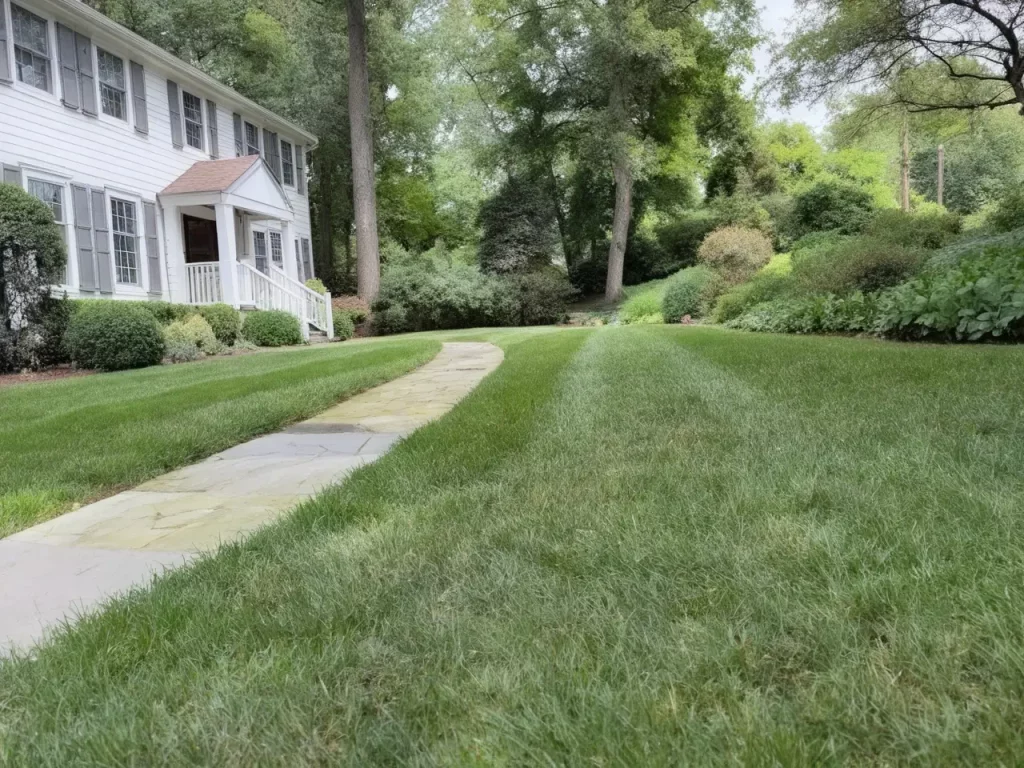
Keep Your Pavers Looking Their Best All Year
Total Turf Inc. helps homeowners keep their pavers in Westchester County, NY, beautiful and built to last through every season. From new paving installations to stonework, masonry, and complete landscaping and hardscaping projects, our team brings the craftsmanship and local know-how your property deserves in Westchester County as well as in Greenwich, CT, and Bedford, NY.
Contact Total Turf Inc. today to schedule a consultation and get your outdoor spaces ready for what winter brings.